🔌 On-Grid Solar System
Efficient & Cost-Effective Grid-Connected Solar Solutions
At SETCOM Solar Solutions, we offer advanced on-grid solar systems designed to maximize energy efficiency and reduce electricity costs for homes and businesses. These systems are directly connected to the main electricity grid, allowing you to generate your own power while staying seamlessly linked to the utility supply.
One of the biggest advantages of an on-grid system is its ability to export excess electricity back to the grid, helping you earn energy credits and further reduce your electricity expenses through net metering.
Our on-grid solar solutions are ideal for customers looking for a high-performance, low-maintenance, and cost-effective solar investment.
Grid-tied, on-grid, utility-interactive, and grid back feeding are all terms used to describe the same concept, a solar system that is connected to the utility power grid. These systems are connected to the utility grid and do not require battery storage.
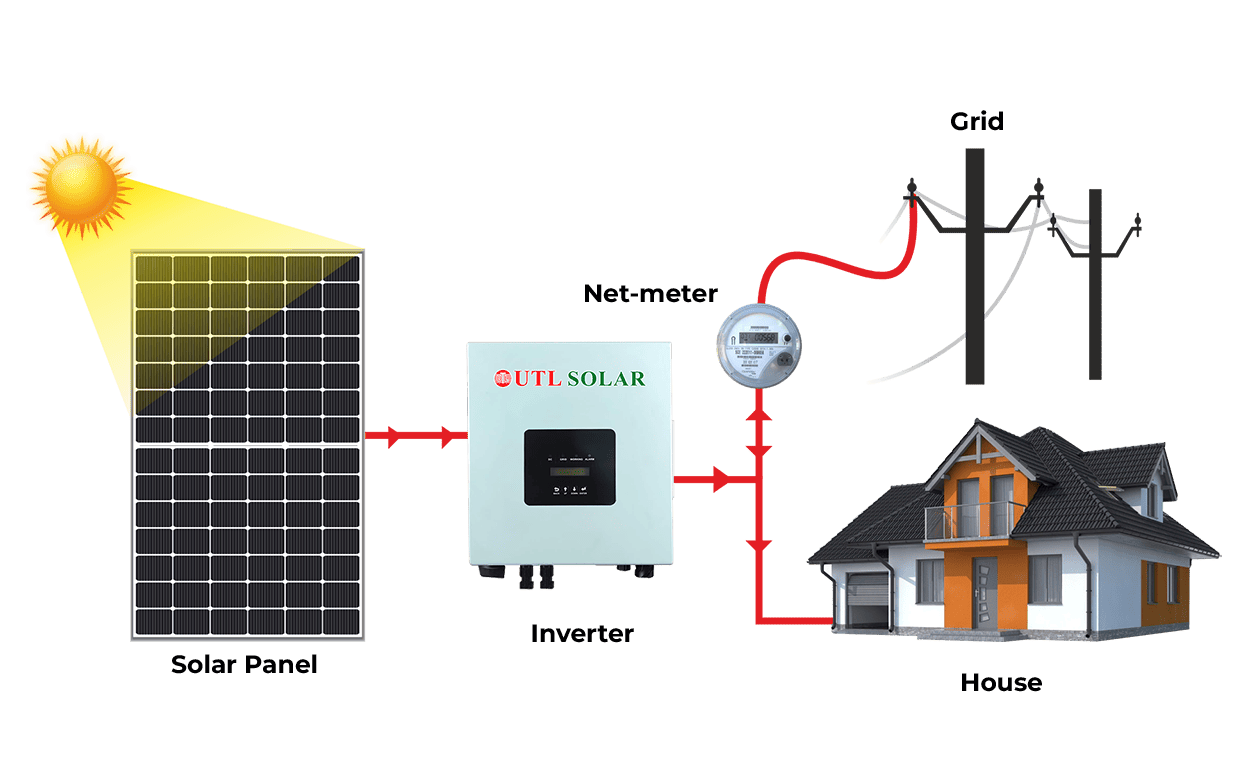
Excess solar power that you generate from an on-grid is exported onto the utility grid and you get paid a feed-in-tariff for the energy that you export. Grid-tied solar systems unable to function or generate electricity during a blackout or power outage due to safety reasons.
What to expect?
Integrated solutions for centralized PV power plants with customized roof-top planning and implementation flexibility from MNM. You can expect highest safety factors and availability, and greatest long-term yields throughout the entire service life which ensures the project’s success and a maximum return on your investment.
Components of Grid-tied PV systems:
1) Grid-tied inverter: The job of a solar inverter is to regulate the voltage and current received from your solar arrays and then convert it from Direct Current (DC) into Alternating Current (AC). These inverters synchronize the phase and frequency of the current to fit that of the utility grid (3-phase, 50 Hz). Additionally, the output voltage is adjusted slightly higher than grid voltage so that excess electricity flows into the grid.
2) Net meter: You will need to replace your current power meter with a net meter. This device is capable of measuring power going in both directions, from the house to the grid and vice versa.
🔧 Key Features:
- Net Metering Enabled
Export surplus energy to the grid and receive credits on your electricity bill - No Battery Requirement
Eliminates the need for costly battery storage, making the system more affordable - High Efficiency & Performance
Designed to generate maximum power output with optimal system performance - Seamless Grid Integration
Continuous power supply with automatic synchronization to the grid
🚀 Key Benefits:
✔ Significantly Lower Electricity Bills
Reduce your monthly power costs by generating your own clean energy
✔ Maximum Energy Efficiency
Utilize solar power during the day while staying connected to the grid for backup
✔ Fast Return on Investment (ROI)
Lower installation cost and higher savings ensure quicker payback
✔ Low Maintenance & Long Lifespan
Fewer components mean minimal maintenance and reliable long-term performance
✔ Environmentally Friendly Solution
Reduce carbon emissions and contribute to a sustainable future
🔌 On-Grid Solar System
Efficient & Cost-Effective Grid-Connected Solar Solutions
At SETCOM Solar Solutions, we offer advanced on-grid solar systems designed to maximize energy efficiency and reduce electricity costs for homes and businesses. These systems are directly connected to the main electricity grid, allowing you to generate your own power while staying seamlessly linked to the utility supply.
One of the biggest advantages of an on-grid system is its ability to export excess electricity back to the grid, helping you earn energy credits and further reduce your electricity expenses through net metering.
Our on-grid solar solutions are ideal for customers looking for a high-performance, low-maintenance, and cost-effective solar investment.
Grid-tied, on-grid, utility-interactive, and grid back feeding are all terms used to describe the same concept, a solar system that is connected to the utility power grid. These systems are connected to the utility grid and do not require battery storage.
Excess solar power that you generate from an on-grid is exported onto the utility grid and you get paid a feed-in-tariff for the energy that you export. Grid-tied solar systems unable to function or generate electricity during a blackout or power outage due to safety reasons.
What to expect?
Integrated solutions for centralized PV power plants with customized roof-top planning and implementation flexibility from MNM. You can expect highest safety factors and availability, and greatest long-term yields throughout the entire service life which ensures the project’s success and a maximum return on your investment.
Components of Grid-tied PV systems:
1) Grid-tied inverter: The job of a solar inverter is to regulate the voltage and current received from your solar arrays and then convert it from Direct Current (DC) into Alternating Current (AC). These inverters synchronize the phase and frequency of the current to fit that of the utility grid (3-phase, 50 Hz). Additionally, the output voltage is adjusted slightly higher than grid voltage so that excess electricity flows into the grid.
2) Net meter: You will need to replace your current power meter with a net meter. This device is capable of measuring power going in both directions, from the house to the grid and vice versa.
🔧 Key Features:
- Net Metering Enabled
Export surplus energy to the grid and receive credits on your electricity bill - No Battery Requirement
Eliminates the need for costly battery storage, making the system more affordable - High Efficiency & Performance
Designed to generate maximum power output with optimal system performance - Seamless Grid Integration
Continuous power supply with automatic synchronization to the grid
🚀 Key Benefits:
✔ Significantly Lower Electricity Bills
Reduce your monthly power costs by generating your own clean energy
✔ Maximum Energy Efficiency
Utilize solar power during the day while staying connected to the grid for backup
✔ Fast Return on Investment (ROI)
Lower installation cost and higher savings ensure quicker payback
✔ Low Maintenance & Long Lifespan
Fewer components mean minimal maintenance and reliable long-term performance
✔ Environmentally Friendly Solution
Reduce carbon emissions and contribute to a sustainable future